


Infection of a person with worms is medically called helminthiasis.Several hundred species of parasites are known to cause this disease.Some of them do not cause noticeable harm, others cause inconvenience, but there are also worms that pose a threat to human life.
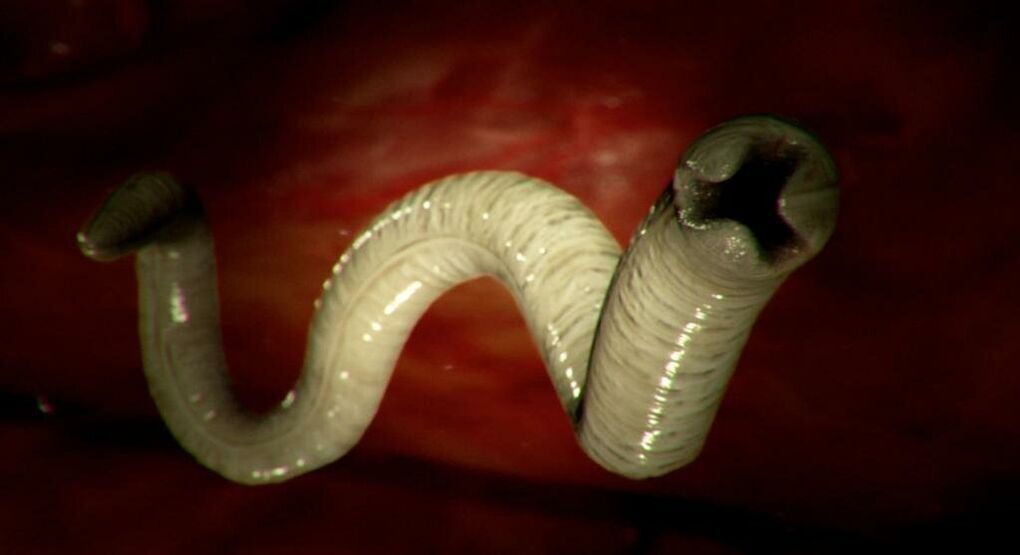
Helminths enter the body in the form of eggs covered with a protective shell and resistant to harsh conditions.The worms are very prolific and lay thousands of eggs every day, increasing the risk of infection.From the parasite carrier, eggs come out with feces.When exposed to favorable conditions, the shell detaches and the egg transforms into a full-fledged parasite in a short time.Worms feed on food or human tissues, multiply rapidly and harm the body with toxins from the products of their vital activity, causing poisoning.
Causes of worms in humans
The disease can be linked to lifestyle, diet or the presence of pets.You can become infected in different ways:
- swim in ponds used to water livestock;
- non-compliance with personal hygiene rules;
- low heat treatment of meat and meat dishes;
- eating unwashed vegetables and fruits;
- raw, unprocessed fish;
- contact with infected animals (cats, dogs, cows);
- living with people who carry helminths;
- consumption of raw water in rural areas.
Important to know: Worms lay thousands or even hundreds of thousands of eggs every day, so any infected person or animal poses a great threat as a source of infection.
Most often, children are exposed to infection, because they follow few hygiene rules and are constantly in contact with each other, transmitting parasites.Pinworms and roundworms, which are found in almost all children, are particularly easily transmitted.They cause a lot of inconvenience and harm the well-being of the child.
Symptoms and signs of worms
The presence of worms in a person is quite easy to determine even without the help of medical examinations.Their primary habitat is the intestine, where they feed on human food and are often excreted with feces.Itching in the anus is observed, as the worms excrete their waste and thus irritate the rectal mucosa.Pinworms, for example, come out of the anus at night, so redness and allergic symptoms are often observed around it, causing an urge to scratch in this place.
There are types of helminths that affect the liver and even the brain.For example, the liver fluke (bovine tapeworm), when entering the human body, “travels” through the body with the bloodstream until stopping in the liver or brain.There it begins to grow, eating the surrounding tissue.A person begins to suffer from illness and, in case of contact with the brain, even mental disorders and ultimately death.The parasite is transmitted by livestock (cows, sheep).
Another dangerous parasite is echinococcus.These worms are parasites in dogs or wolves, transmitted from them to humans by contact.Helminths attack the liver and lungs.In this case, headaches, dry cough and loss of appetite are observed.In addition, it is difficult to diagnose this type and during examinations it can be confused with a tumor.Echinococci are dangerous for health and can cause serious bodily harm or even death.
The main symptoms of helminthic infection:
- headaches;
- nausea;
- to vomit;
- weight loss;
- itching in the anus;
- bloating and flatulence;
- diarrhea and other digestive disorders;
- inflammation of the lymph nodes;
- increased body temperature;
- abdominal pain;
- coughing for no reason;
- skin allergies.
The worms appear some time after infection.At first, symptoms are absent or barely noticeable, since the amount of toxic substances released by the parasites does not cause serious problems.Then, as it grows and multiplies, the symptoms intensify and become more pronounced.The general state of health deteriorates sharply, so measures must be taken to detect and destroy them.
Treatment of helminthic infestation
You should know that parasites will not disappear on their own.At the same time, health will constantly deteriorate due to poisoning with toxins.This will weaken the body and immune system, leaving a person vulnerable to inflammatory infections and other illnesses.
Killing worms is called deworming.The process includes the use of medications to kill parasites and medications to reduce the allergic reaction.Each type of parasite is sensitive to certain substances, so to get rid of worms it is necessary to determine their type.In this case, only a doctor will help who, after carrying out tests and other studies, will make a diagnosis and prescribe treatment.
In the most severe cases, doctors prescribe surgery to remove the worms.
Interesting :The bovine tapeworm sometimes reaches a length of 10 meters in humans.It consists of small units that can develop as an independent organism.Therefore, it can only be removed surgically, and if the body is torn into pieces, they will continue to develop and grow.
Prevention
Helminths enter the body in the form of microscopic eggs.To avoid this, it is necessary to follow a number of recommendations:
- respect the rules of personal hygiene (wash your hands before eating, after contact with animals, after using the toilet, etc.);
- wash vegetables and fruits with clean running water, preferably boiled water;
- thoroughly fry meat and fish;
- if you have pets, have them checked regularly by a veterinarian for the presence of helminths;
- Get tested for intestinal parasites once a year.
Advice: Do not swim in bodies of water near which livestock graze.In this case, there is a risk of infection with bovine tapeworm, which is very dangerous.
Worms pose a great threat to human health and interfere with normal life activities.It is important to identify them as early as possible and eliminate them by treatment, because it is easier to get rid of them in the early stages.In addition to the risk to your health, there is a possibility of infecting your loved ones with parasites, therefore at the first symptoms it is recommended to consult a doctor who will make a diagnosis and prescribe treatment.Additionally, it is important to follow preventive measures to avoid any infection.It is better to prevent the appearance of worms in the body in advance than to get rid of them later.